Introduction
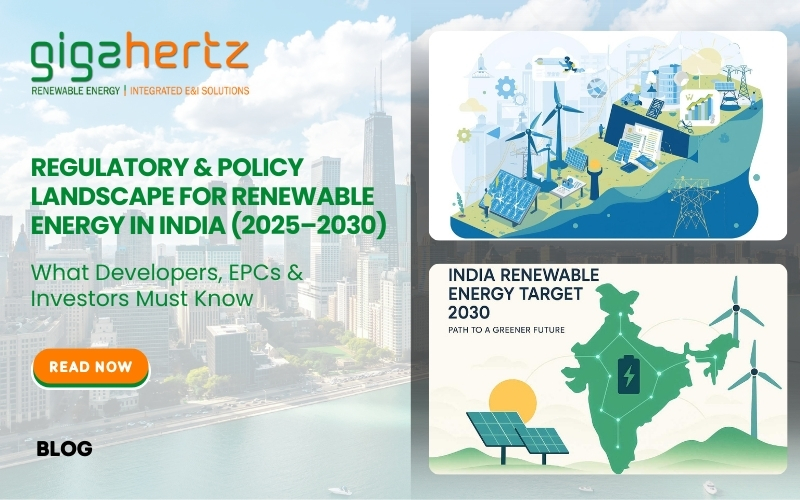
India is entering a decisive decade for clean energy. With ambitious targets of 500 GW of non-fossil fuel capacity by 2030, the country is reshaping its power sector through bold renewable energy policies, regulatory reforms, and market mechanisms.
For renewable energy developers, EPC contractors, investors, and utilities, understanding the regulatory and policy landscape for renewable energy in India (2025–2030) is no longer optional — it is essential for project success, risk management, and long-term profitability.
This blog provides a practical, forward-looking guide to the evolving rules, incentives, compliance frameworks, and market trends shaping India’s renewable future.
India’s Renewable Energy Vision for 2030
The Government of India has committed to:
-
500 GW non-fossil fuel capacity by 2030
-
50% of electricity generation from renewables
-
Net-zero emissions by 2070
-
Rapid expansion of green hydrogen, energy storage, and EV infrastructure
These goals are driving a new generation of renewable energy regulations, grid reforms, and investment policies.
Key Regulatory Authorities Shaping Renewable Energy
Understanding the policy ecosystem starts with knowing the regulators.
-
MNRE – Ministry of New & Renewable Energy
-
CEA – Central Electricity Authority
-
CERC – Central Electricity Regulatory Commission
-
SERCs – State Electricity Regulatory Commissions
-
DISCOMs – Power distribution companies
-
SECI – Solar Energy Corporation of India
-
NTPC & PGCIL – Grid development and power evacuation
Together, these institutions define the rules of engagement for renewable developers.
Major Renewable Energy Policies Impacting 2025–2030
1. National Electricity Plan (NEP) 2023–2032
The NEP outlines India’s future power mix:
-
Massive addition of solar, wind, and hybrid capacity
-
Strong focus on energy storage systems (BESS & pumped hydro)
-
Reduced dependence on new coal plants
-
Grid modernization through smart substations and digital SCADA
For developers, this means renewables + storage projects will dominate approvals and funding.
2. Renewable Purchase Obligation (RPO) Trajectory
RPO norms now mandate increasing renewable consumption:
-
Higher solar and wind RPO targets
-
Introduction of energy storage obligations
-
Stricter compliance for DISCOMs and open-access consumers
This creates stable long-term demand for renewable power projects.
3. Green Energy Open Access Rules
The Green Energy Open Access Regulations have simplified access for:
-
Commercial & industrial consumers
-
Data centers, IT parks, and manufacturing units
Key benefits:
-
Reduced minimum load threshold
-
Faster approvals
-
Banking and wheeling clarity
This policy is accelerating corporate renewable PPAs and captive solar/wind plants.
4. National Green Hydrogen Mission
One of the most important policy drivers for 2025–2030.
Focus areas:
-
Green hydrogen production
-
Electrolyzer manufacturing
-
Renewable-linked hydrogen hubs
-
Export-oriented clean fuel markets
This will drive massive solar + wind + storage capacity addition.
5. Energy Storage & Battery Policies
Energy storage is now a core pillar of grid planning.
Key developments:
-
VGF schemes for BESS projects
-
Market participation rules for storage
-
Pumped hydro project classification as renewable
-
Time-of-day tariffs encouraging storage deployment
Developers should prepare for hybrid + storage tenders becoming the norm.
Regulatory Trends Shaping Renewable Projects (2025–2030)
1. Shift from Feed-in Tariffs to Competitive Bidding
Most renewable capacity is now awarded through:
-
Reverse auctions
-
Hybrid tenders
-
RTC (Round-the-Clock) renewable bids
This increases efficiency but puts pressure on project cost optimization and technology selection.
2. Stronger Grid Code & Forecasting Regulations
Developers must comply with:
-
Real-time generation forecasting
-
Deviation settlement mechanisms (DSM)
-
Grid stability norms
This drives adoption of SCADA, forecasting tools, and digital substations.
3. Land, Environment & Permitting Reforms
Key trends:
-
Faster approvals for renewable parks
-
Digital land records
-
Streamlined forest & wildlife clearances
-
ESG-linked financing requirements
Developers must align projects with sustainability and social compliance standards.
Financial Incentives & Support Mechanisms
India continues to support renewables through:
-
Production Linked Incentive (PLI) for solar modules, inverters, and storage
-
VGF (Viability Gap Funding) for offshore wind & storage
-
Concessional finance from IREDA, PFC, REC
-
Green bonds & climate finance
-
State-level incentives like stamp duty exemptions and tax benefits
These measures reduce capital risk for renewable developers.
State-Level Policy Variations: What Developers Must Track
While central policies provide direction, state regulations decide project reality.
Key differences across states include:
-
Land lease norms
-
Wheeling & banking charges
-
Cross-subsidy surcharges
-
Grid connectivity timelines
-
Open-access approval processes
Developers should maintain a state-wise regulatory tracker to manage risks effectively.
Compliance Requirements for Renewable Developers
Between 2025 and 2030, compliance will become more digital, more transparent, and more enforceable.
Key compliance areas:
-
Grid code adherence
-
Cybersecurity for SCADA & substations
-
Environmental and social governance (ESG) reporting
-
Power market participation rules
-
Data reporting to regulators
-
Safety and electrical standards
Non-compliance could mean penalties, curtailed power, or delayed payments.
Emerging Policy Areas to Watch
1. Offshore Wind Regulations
India is preparing for large-scale offshore wind deployment with new bidding frameworks and maritime zoning policies.
2. Carbon Markets & Trading
The Indian Carbon Market (ICM) will enable:
-
Carbon credit trading
-
Renewable energy monetization beyond tariffs
-
ESG-linked revenue streams
3. Digital Power Markets
Reforms in power exchanges and market coupling will:
-
Improve price discovery
-
Encourage merchant renewable plants
-
Enable flexible contracts
4. Cybersecurity Regulations for Power Infrastructure
With increasing digitalization, regulators are emphasizing:
-
OT security
-
Substation cybersecurity
-
SCADA protection
-
Data sovereignty
This impacts every renewable plant connected to the grid.
What Renewable Energy Developers Should Do (2025–2030)
To stay competitive in the evolving policy landscape, developers must:
-
Build regulatory intelligence teams
-
Invest in digital infrastructure (SCADA, forecasting, cybersecurity)
-
Design projects for hybrid + storage readiness
-
Align with ESG and sustainability reporting
-
Track state-level policy changes continuously
-
Partner with experienced engineering & automation providers
How GEISPL Supports Renewable Developers
At GEISPL (Gigahertz Engineering & Industrial Solutions Pvt. Ltd.), we help renewable energy companies navigate both technology and regulatory complexity.
Our Expertise Includes
-
SCADA & substation automation for renewable plants
-
Grid compliance solutions
-
Digital monitoring & forecasting systems
-
OT cybersecurity for power infrastructure
-
Integration of wind, solar, hybrid & storage assets
-
Support for regulatory readiness & digital transformation
We enable developers to build policy-aligned, future-ready renewable projects.
Final Thoughts
The period from 2025 to 2030 will define India’s clean energy future.
For renewable energy developers, success will depend not only on engineering excellence — but on regulatory awareness, digital readiness, and strategic adaptability.
Understanding the regulatory and policy landscape for renewable energy in India is the first step toward building projects that are:
-
Bankable
-
Scalable
-
Compliant
-
And future-proof
The developers who align early with policy trends
will lead India’s renewable transformation.
Ready to Build Policy-Ready Renewable Projects?
If you are planning wind, solar, hybrid, or storage projects and want to ensure regulatory alignment and digital readiness, GEISPL is here to support you.
???? Connect with our experts and move confidently into India’s renewable energy future.
Category: Renewable Energy