
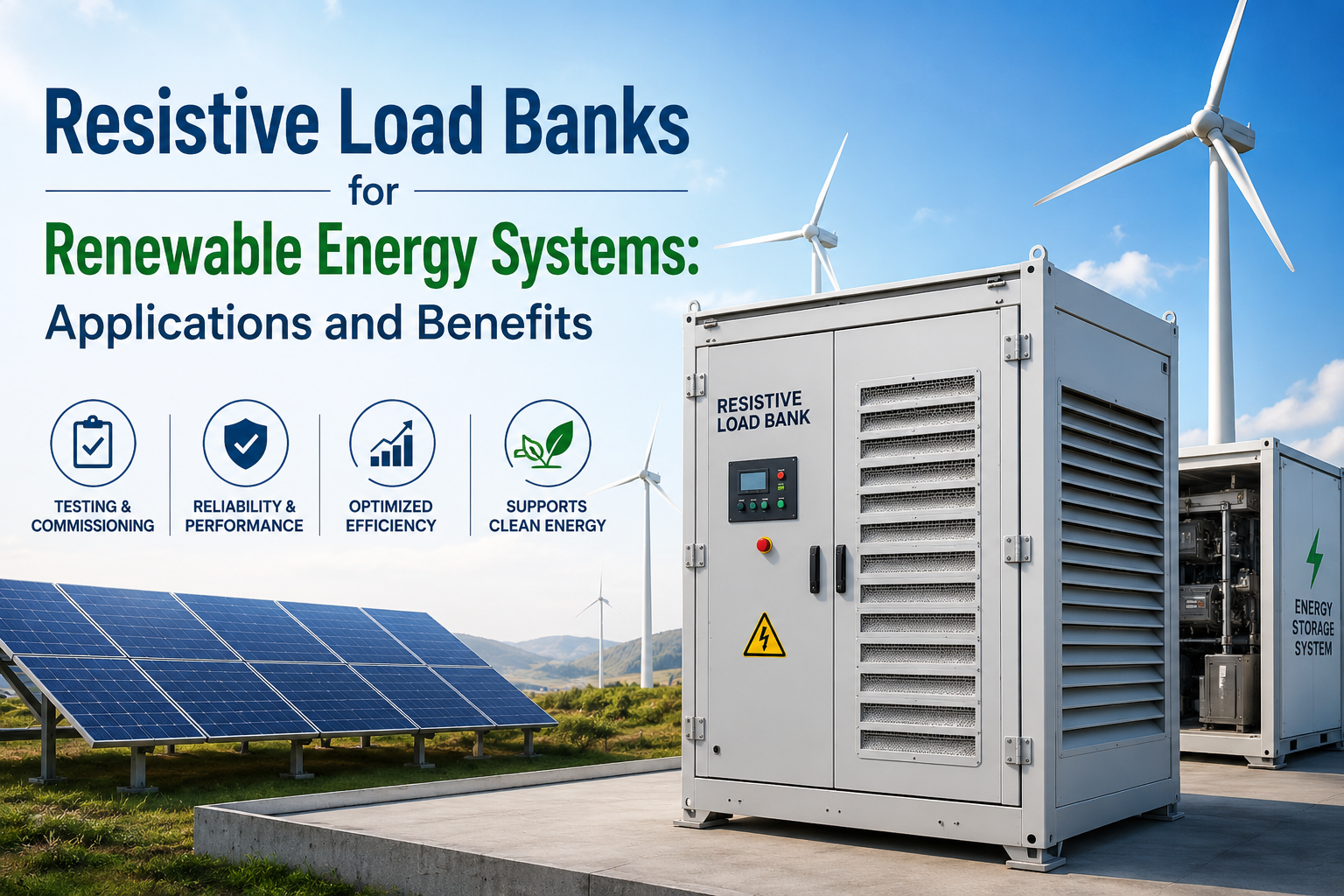
Resistive Load Banks for Renewable Energy Systems: Applications and Benefits
Renewable energy systems, whether wind farms or hybrid installations, depend on rigorous testing to ensure they perform reliably under real-world electrical demand. This is where resistive load banks for renewable energy systems become indispensable. As clean energy capacity scales up across the globe, engineers and plant operators need dependable tools to validate generator output, verify protection systems, and simulate real operating loads before a facility goes live, or during scheduled maintenance.
A resistive load bank is a purpose-built piece of test equipment that converts electrical energy into heat through fixed or variable resistive elements, effectively mimicking a real electrical load. Unlike reactive or inductive load banks, resistive load banks apply a pure, unity power factor load, making them the go-to choice for commissioning generators, testing uninterruptible power supplies, and validating renewable energy infrastructure. In this blog, we'll explore how resistive load banks work, why they matter for renewable energy applications, and the key benefits they bring to wind, hybrid power systems.
What Is a Resistive Load Bank?
A resistive load bank is an electrical device designed to draw a controlled, predictable amount of power from a source, such as a generator, inverter, or grid-tied renewable system, and dissipate that energy as heat through resistive elements like stainless steel or nickel-chromium coils. Because the load is purely resistive, the current drawn stays in phase with the voltage, resulting in a power factor of 1.0. This makes resistive load banks ideal for testing the true kW capacity of a power source without introducing the complications of reactive power.
In practical terms, a resistive load bank allows engineers to artificially create a load condition that a generator turbine would normally only see when connected to actual consumers. This is essential because renewable assets are frequently commissioned, repaired, or upgraded in locations where the surrounding grid or load demand isn't yet available or predictable.
Why Do Renewable Energy Systems Need Load Bank Testing?
Renewable power sources, unlike traditional fossil-fuel generators, operate under variable and sometimes unpredictable conditions. Wind speeds fluctuate, solar irradiance changes throughout the day, and grid connection points may not always be able to absorb full-rated output during testing phases. This creates a genuine need for load banks for renewable energy projects at several stages of a system's lifecycle:
- Commissioning new installations: Before a wind turbine is connected to the grid, its output, protection relays, and control systems must be verified under load.
- Routine maintenance and performance verification: Periodic testing confirms that generators, backup systems, and inverters are still delivering rated capacity.
- Backup and hybrid system validation: Many renewable installations pair with diesel generators or battery storage for backup power; load banks confirm these systems can handle expected demand.
- Protection and control system testing: Load banks help validate that circuit breakers, relays, and SCADA-based monitoring systems respond correctly under load conditions.
- Post-repair verification: After major repairs to a turbine generator or inverter, a controlled load test confirms the equipment has been restored to full operating capacity.
Without a renewable energy load bank, none of this testing can be done safely or accurately, especially in remote wind farm locations where grid absorption capacity is limited.
Applications of Resistive Load Banks in Renewable Energy
1. Wind Energy Systems
Load banks for wind energy systems are used extensively during the commissioning of new wind turbine generators (WTGs). Since wind output depends on variable wind speeds, it's not always feasible to rely on natural wind conditions to fully load-test a turbine's generator, converter, and protection systems. A resistive load bank lets technicians apply a controlled, adjustable load to the turbine's output, simulating full-load conditions regardless of actual wind availability.
This is particularly valuable for:
- Verifying generator winding temperature rise under sustained load
- Testing converter and inverter performance at various load steps
- Validating protection relay settings and trip thresholds
- Confirming SCADA and control panel readings match actual load conditions
2. Hybrid and Backup Power Systems
Many renewable energy sites, particularly those in remote or off-grid locations, pair wind assets with diesel generators and battery energy storage systems (BESS) for backup power. Electrical load bank testing on these hybrid configurations ensures seamless transitions between renewable, storage, and backup sources, and confirms that automatic transfer switches and control logic function as designed.
3. Substation and Grid Interconnection Testing
Before a renewable energy plant is connected to the transmission or distribution grid, substation equipment, including transformers, protection relays, and busbar panels, often requires load testing. Load bank for power system testing at this stage verifies that the entire electrical chain, from generation to grid interconnection, performs reliably under simulated real-world load conditions.
Key Benefits of Resistive Load Banks
Accurate Performance Validation
Resistive load banks provide a controlled, repeatable, and measurable load, allowing engineers to accurately assess whether a generator, inverter, or turbine is meeting its rated performance specifications. This precision is difficult to achieve when relying solely on fluctuating natural load conditions.
Improved Reliability and Reduced Downtime
By identifying weaknesses in generation, protection, or control systems before they cause failures in the field, load bank testing helps renewable energy operators avoid unplanned outages. Catching a failing component during a controlled test is far less costly than discovering it during live operation.
Safe Commissioning in Remote Locations
Wind farm parks are often located far from urban load centers. Resistive load banks give commissioning teams the ability to fully test equipment on-site, without waiting for grid connection or relying on unpredictable natural conditions.
Compliance and Warranty Support
Many equipment manufacturers and utility interconnection standards require documented load testing as part of the commissioning or warranty process. A resistive load bank generates the verifiable data needed to demonstrate compliance with these requirements.
Protects Long-Term Asset Health
Running generators or inverters at appropriate load levels, rather than leaving them idle or underutilized, helps prevent issues like wet stacking in diesel gensets or long-term degradation in inverter components. Scheduled load bank testing keeps renewable energy assets operating at peak health throughout their lifecycle.
Flexibility Across Load Ranges
Modern resistive load banks are available in a wide range of capacities and configurations, from portable, trailer-mounted units for smaller distributed generation to large, permanently installed banks for utility-scale wind projects, making them adaptable to virtually any renewable energy testing scenario.
How GEISPL Supports Load Bank Testing Outcomes?
While resistive load bank testing validates raw generator, inverter, and turbine output, the results only matter if the surrounding control, protection, and monitoring infrastructure can act on them correctly. This is where GEISPL (Gigahertz Engineering and Industrial Solutions Private Limited) plays a critical role for wind and hybrid energy operators.
GEISPL designs and supplies the SCADA systems, Power Plant Controllers (PPC), relay panels, busbar panels, and control panels that sit downstream of a load bank test, the systems that must correctly interpret protection relay trips, log SCADA readings, and confirm control logic during a load step. When a resistive load bank applies a controlled load to a wind turbine generator or substation, it's GEISPL's control and automation systems that verify whether the protection settings, SCADA readouts, and PPC responses are behaving exactly as commissioning engineers expect.
With over a decade of experience, 60+ installations, and ISO 9001 and ISO 27001 certifications, GEISPL brings this control-systems expertise to the full lifecycle of wind, solar, and hybrid assets, helping ensure that when a load bank confirms a generator or inverter is performing to spec, the plant's automation and protection systems are equally ready to respond.
Choosing the Right Load Bank for Renewable Energy Testing
Selecting the right resistive load bank depends on several factors specific to the renewable energy application:
- Power rating: The load bank must match or exceed the maximum output of the generator, inverter, or turbine being tested.
- Voltage and frequency compatibility: Ensure the load bank supports the voltage class and frequency of the system under test.
- Portability requirements: Remote wind sites often benefit from trailer-mounted or containerized load banks that can be transported easily.
- Step-load control: For testing dynamic response and transient behavior, load banks with programmable step-loading capabilities offer more detailed diagnostic data.
- Environmental protection: Outdoor renewable energy sites require load banks rated for weather exposure, dust, and temperature extremes.
Partnering with an experienced renewable energy solutions provider ensures the right load bank specification is matched to your specific wind, hybrid testing requirements.
Frequently Asked Questions
What is the difference between a resistive load bank and a reactive load bank?
A resistive load bank applies a load at unity power factor (1.0), testing only the real power (kW) capability of a source. A reactive load bank, by contrast, introduces inductive or capacitive elements to test reactive power (kVAR) handling, which is useful for evaluating a generator's or inverter's response to more complex, real-world load profiles.
Why is load bank testing important for wind turbines specifically?
Wind turbine output depends on variable wind speeds, so natural conditions alone can't reliably verify full-load performance. A load bank allows technicians to apply a controlled, adjustable load to test generator windings, converters, and protection systems independent of actual wind availability.
How often should renewable energy systems undergo load bank testing?
This varies by equipment type and site conditions, but most operators schedule load bank testing during commissioning, after major repairs, and as part of periodic preventive maintenance, commonly annually or as recommended by the equipment manufacturer.
Can resistive load banks be used for both AC and DC systems?
Yes. Resistive load banks are available in AC and DC configurations, making them suitable for testing everything from AC-side wind turbine generators to DC-side solar strings and battery storage systems.
Conclusion
As renewable energy capacity continues to expand across wind and hybrid installations, the role of dependable testing infrastructure, including resistive load banks, only grows more important. From commissioning new wind turbine generators to validating hybrid backup systems, load bank testing gives operators confidence that their assets will perform reliably once connected to the grid. But a successful load test is only half the picture: the control, protection, and monitoring systems that respond to that test data need to be just as reliable.
This is where GEISPL (Gigahertz Engineering and Industrial Solutions Private Limited) brings real value to renewable energy developers and operators. With over a decade of experience and 60+ installations across the wind and solar sectors, GEISPL specializes in engineering solutions that support the full lifecycle of renewable energy assets, from SCADA and power plant controllers to control panels, substation automation, relay panels, and industrial automation systems. Backed by ISO 9001 and ISO 27001 certifications and trusted by leading OEMs and power generation companies including GE and Cleanmax, GEISPL understands the commissioning and validation challenges renewable operators face, ensuring that once a load bank test confirms a generator or inverter is grid-ready, the surrounding automation systems are ready too.
Category: SCADA